How to Choose Car Show Classes and Awards

· 14 min read
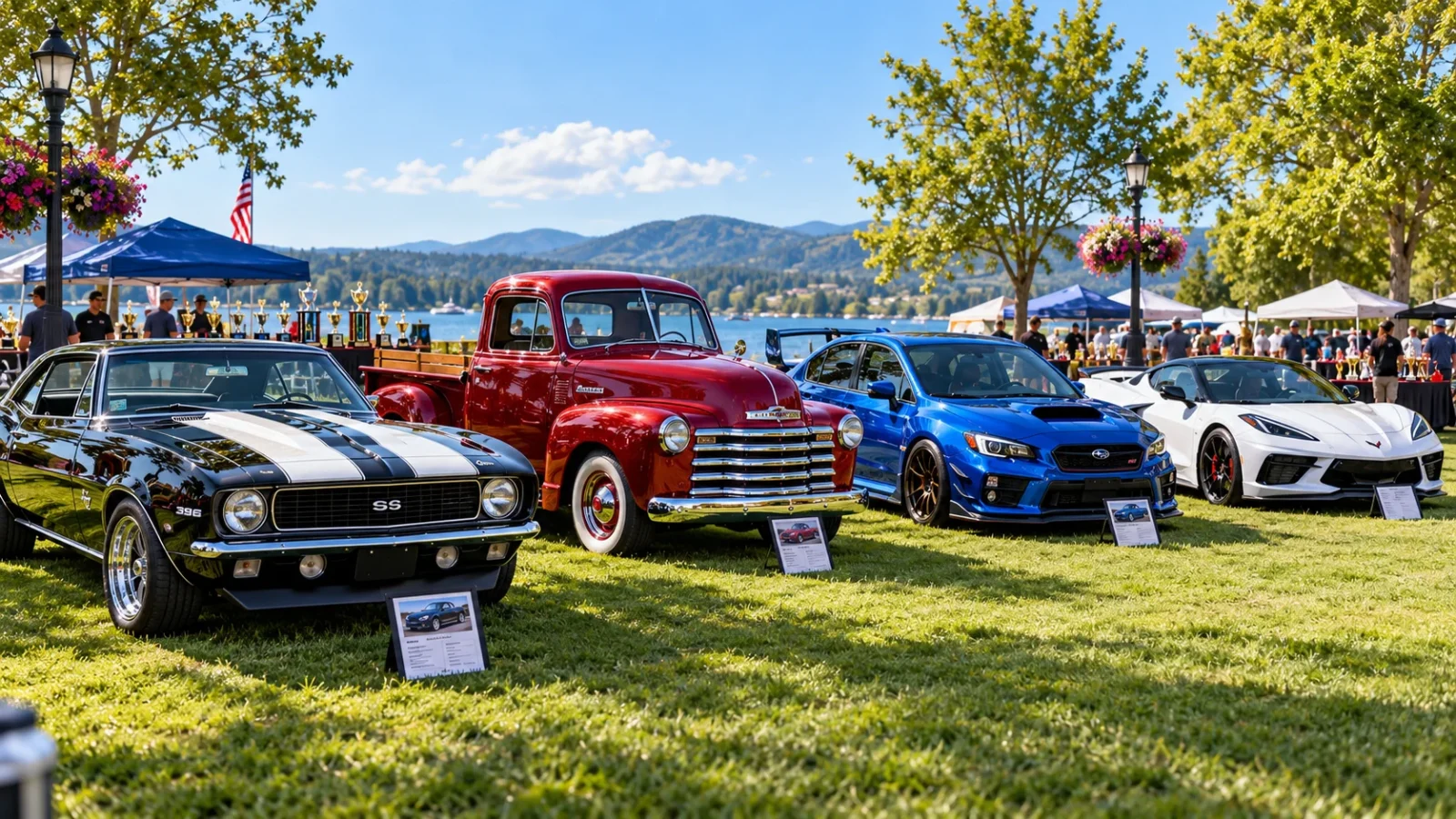
A 1968 Camaro, a restored farm truck, a modified Subaru and a spotless new Corvette all deserve a fair shot at a trophy. That doesn’t mean they should compete against one another. Choosing the right car show classes and awards is one of the trickiest parts of organizing a show & shine, especially when you don’t know exactly which vehicles will turn up.
Too many categories leave you handing out trophies to classes with one entrant. Too few force completely different vehicles into awkward comparisons. The best class structure reflects the vehicles attending, keeps judging manageable and gives owners a clear idea of where they belong.
Build classes around the cars that will actually attend#
Start with your expected entrants, not a long list of trophy categories.
An established classic-car club may already know which makes and eras its members favour. A first-year community show in the Fraser Valley could attract anything from pre-war restorations to lifted pickups and modern imports. The second event needs more flexibility.
Look at previous attendance records if they’re available. Otherwise, ask participating clubs what they expect to bring and collect basic vehicle details during preregistration.
You don’t need to predict every entrant. You need enough information to avoid building a competition around cars that might never arrive.
Use vehicle era, type and build style as starting points#
Most community shows organize vehicles around three characteristics.
Era separates cars by production period. Common examples include pre-1950, 1950s, 1960s, 1970s and modern vehicles. This makes sense when comparing vehicles built under broadly similar design and manufacturing expectations.
Vehicle type distinguishes cars, trucks, motorcycles and sometimes commercial or specialty vehicles. A restored pickup and a restored passenger car may share an era without being directly comparable.
Build style recognizes the difference between stock, restored, modified and custom vehicles. A factory-original muscle car and a heavily reworked pro-touring build may need different judging priorities.
These approaches can overlap, but combining every possible distinction quickly becomes unmanageable.
The National Association of Automobile Clubs of Canada’s National Judging Guidelines provide a detailed example of how collector-vehicle categories can be organized. The guidelines distinguish originality and authenticity in stock vehicles from design and workmanship in modified vehicles.
That level of detail suits structured club judging. A relaxed community show doesn’t necessarily need dozens of classes.
Avoid classes with only one or two entrants#
A trophy loses some competitive meaning when its recipient is the only vehicle in the category.
Imagine a show advertising separate awards for 1960s Mustangs, 1970s Mustangs, modern Mustangs, Camaros, Corvettes, European sports cars, imports, trucks and motorcycles. If just 45 vehicles arrive, several categories may have almost no competition.
A practical editorial starting point is to aim for roughly five or more competing vehicles in a judged class where attendance permits. This isn’t an official rule or a minimum imposed by any Canadian association.
For specialist events, a smaller class may be entirely reasonable. Three rare pre-war vehicles could represent a meaningful category, while three ordinary late-model sedans might fit comfortably into a broader modern-car class.
The solution isn’t to eliminate every small category. It’s to decide which distinctions genuinely matter.
A workable class structure for small and mid-sized shows#
The number of classes should grow with the field, but not automatically in proportion to it. A larger event may justify dividing classics by decade or separating stock and modified trucks. A smaller one benefits from broader categories.
These examples are planning models, not prescribed standards. They assume a mixed community show with judged class awards and a separate People’s Choice vote.
| Expected vehicles | Suggested classes | Possible class structure |
|---|---|---|
| 50 | 5–6 | Classic, Muscle, Hot Rod/Custom, Modern/Import, Truck, Motorcycle |
| 100 | 8–10 | Pre-1960, 1960s Classic, 1970s–80s Classic, Muscle, Hot Rod, Custom/Modified, Modern Performance/Import, Truck, Motorcycle |
| 200 | 12–16 | More detailed era divisions, separate stock and modified categories, dedicated truck, import, hot rod and motorcycle classes |
For a 50-car show, six classes provide an average of just over eight vehicles per class. Actual entries won’t distribute evenly, so preregistration still matters.
At 100 vehicles, splitting major groups becomes more reasonable. You might separate preserved classics from heavily customized vehicles or create a dedicated import category if registration numbers support it.
A 200-vehicle event has room for more specific awards. But even then, there’s little value in creating four truck classes if only six trucks enter.
The better question is not “How many classes can we offer?” but “Which vehicles would be unfairly compared if we kept these classes together?”
When to split, merge or reclassify#
Use three decisions rather than constantly inventing new categories.
Split a class when it contains substantial numbers of vehicles with genuinely different judging priorities. For example, a modern performance category crowded with factory-stock sports cars and extensively modified tuner builds might benefit from separate stock and modified divisions.
Merge classes when participation is too thin to support meaningful competition. Combining 1980s and 1990s classics may be reasonable if both groups have only a few entries. Avoid merging categories whose vehicles require fundamentally incompatible scoring criteria.
Reclassify a vehicle when the entrant fits the published definition of another class more accurately. This should correct a registration mismatch, not be used to move a strong contender into an easier category.
A useful approach is to publish provisional classes along with a clearly stated consolidation policy. Tell owners that final categories may depend on registration numbers and specify when assignments become final.
Once judging begins, the class structure should remain stable except where a documented administrative error requires correction.
Keep stock, restored and modified vehicles comparable#
Build condition and build philosophy aren’t the same thing.
An unrestored vehicle can be well preserved. A fully restored car can be poorly executed. A modified vehicle can be exceptionally finished without resembling its original factory configuration.
Judging becomes unfair when organizers treat all three as variations of the same standard.
When originality deserves its own class#
An original or survivor vehicle retains meaningful factory components, finishes and character. It may show age without being neglected.
For example, an unrestored 1972 pickup with original interior trim, factory paint and modest wear shouldn’t necessarily be penalized against a freshly restored truck simply because the restoration has a deeper gloss.
Dedicated preservation or original classes allow judges to recognize authenticity rather than cosmetic perfection alone.
The NAACC guidelines distinguish original vehicles from restored ones and establish specific eligibility criteria for formal club judging. A community event may use simpler definitions, but shouldn’t borrow the association’s technical thresholds selectively while claiming to follow its judging standards.
If your show advertises a survivor class, explain what qualifies. Is partial repainting acceptable? What about replacement upholstery, upgraded brakes or a rebuilt engine?
Owners should know the answers before registering.
When custom work changes the judging criteria#
Modified and custom vehicles deserve evaluation based on how successfully the work has been carried out.
Judges might consider:
- Quality of fabrication and component installation.
- Paint finish, panel alignment and body modifications.
- Interior craftsmanship and design consistency.
- Engine-bay presentation, wiring and visible workmanship.
- How well the modifications complement the overall build.
A modified Civic with a carefully executed engine swap should not lose points merely because its engine is no longer factory-original. Likewise, a stock restoration shouldn’t receive extra credit for modifications that would undermine its intended authenticity.
Consider a 1969 Camaro featuring modern suspension, aftermarket wheels and an upgraded powertrain. It could reasonably qualify as both a muscle car and a custom build under loosely written rules.
The organizer needs a clear classification principle.
If the muscle class is intended for stock or period-correct vehicles, the Camaro belongs in a modified or custom category. If the event defines muscle cars broadly, including modified examples, it may remain eligible there.
The vehicle should have one primary judged class unless the published rules explicitly allow multiple class entries. Special awards such as Best Paint can be treated separately.
That distinction prevents owners from competing for several overlapping class trophies simply because their vehicle fits multiple descriptions.
Decide which awards actually add value#
Class trophies recognize vehicles within a defined group. Special awards recognize achievements or qualities that may cross those groups.
A good awards program gives each trophy a clear purpose.
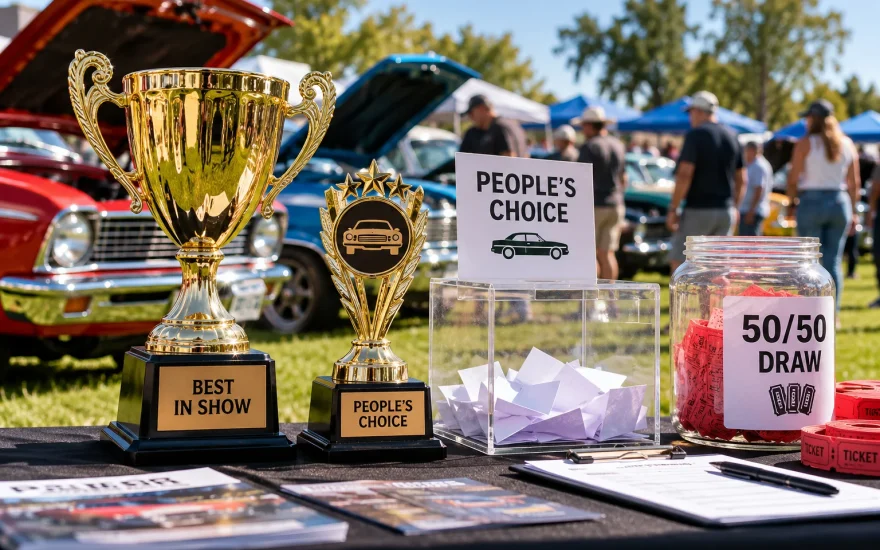
Best in Show typically recognizes the strongest overall vehicle under the event’s judging system. The organizer must define whether that means the highest numerical score, a comparison among class winners or a separate final assessment by judges.
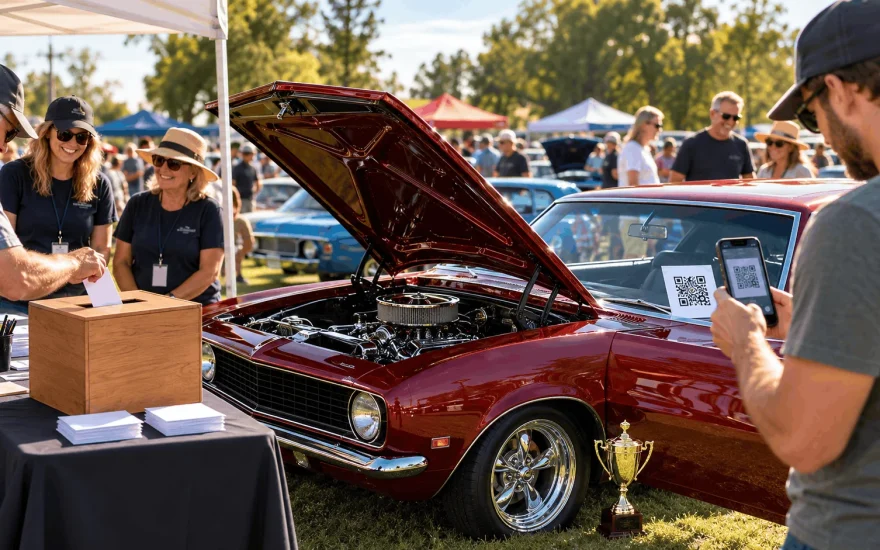
People’s Choice reflects spectator preference. It’s often the most accessible award for visitors because they can participate without understanding detailed judging criteria.
Best Paint recognizes exceptional paintwork, finish quality and preparation. It’s most useful when paint is a genuine strength of the field rather than simply another trophy to distribute.
Best Interior can reward restoration accuracy or custom craftsmanship, depending on the show’s format.
Best Engine Bay recognizes cleanliness, installation quality and presentation. It should not automatically become a contest for the most horsepower.
Sponsor’s Choice gives a sponsor an opportunity to recognize a favourite vehicle. The criteria and selection authority should be disclosed so it isn’t confused with a formal judged award.
You may also consider Best Truck, Best Motorcycle, Best Hot Rod or Best Custom, but these can become redundant if identical awards already exist as judged classes.
A separate People’s Choice award is a particularly natural fit for casual British Columbia shows. For example, Downtown Kelowna’s Show N Shine on Bernard has presented both judged vehicle awards and a People’s Choice award, demonstrating how the formats can coexist without serving the same purpose.
One additional decision deserves attention: can a vehicle win multiple trophies?
Allowing a class winner to receive Best in Show or People’s Choice is perfectly workable if announced in advance. Alternatively, some organizers prefer to spread recognition across more entrants.
Either approach can be fair. Changing the policy after the winning vehicles are identified is not.
Calculate the number of trophies before ordering#
Trophy planning is easier once the class structure and number of placements are settled.
Suppose a show has eight judged classes and wants to recognize first and second place in each.
8 classes × 2 trophies = 16 class trophies
Add one Best in Show and one People’s Choice award:
16 + 2 = 18 trophies
That becomes the initial order quantity.
Now calculate the cost using actual Canadian supplier quotes rather than an assumed average trophy price.
| Budget item | Calculation |
|---|---|
| Class trophies | Number of classes × placements × quoted unit price |
| Special awards | Number of awards × quoted unit price |
| Engraving | Supplier’s per-item charge or included service |
| Delivery | Quoted shipping cost in CAD |
| Taxes | Applicable taxes based on purchase and supplier |
| Contingency | Organizer-selected allowance for changes or replacements |
For example, if a supplier quotes C$18 per class trophy and C$35 per special award, the illustrative merchandise cost would be:
16 × C$18 = C$288
2 × C$35 = C$70
Merchandise subtotal: C$358, before engraving, applicable taxes and delivery.
These are hypothetical quotation amounts used to demonstrate the calculation, not verified current market prices.
Acrylic awards, engraved plaques and traditional trophies may have different production times and customization options. Ask suppliers whether engraving is included, when artwork must be approved and how replacements are handled.
Ordering a small number of blank spare awards can help if an additional category is genuinely needed. Avoid pre-engraving speculative classes that may attract no entrants.
For shows operating on a tight budget, one award per class plus a few meaningful special trophies may be better than distributing multiple inexpensive awards across too many categories.
Publish class rules before registration opens#
Owners should be able to determine their likely class before paying an entry fee or committing to attend.
A class list without definitions leaves too much room for interpretation.
For each category, publish the eligible vehicle years, types or modification criteria. Explain whether vehicles are entered according to model year, build style, manufacturer or another characteristic.
A short set of rules can also explain whether owners may request a class change, whether organizers can consolidate categories and when the assignments become final.
Decide how disputed classifications will be handled#
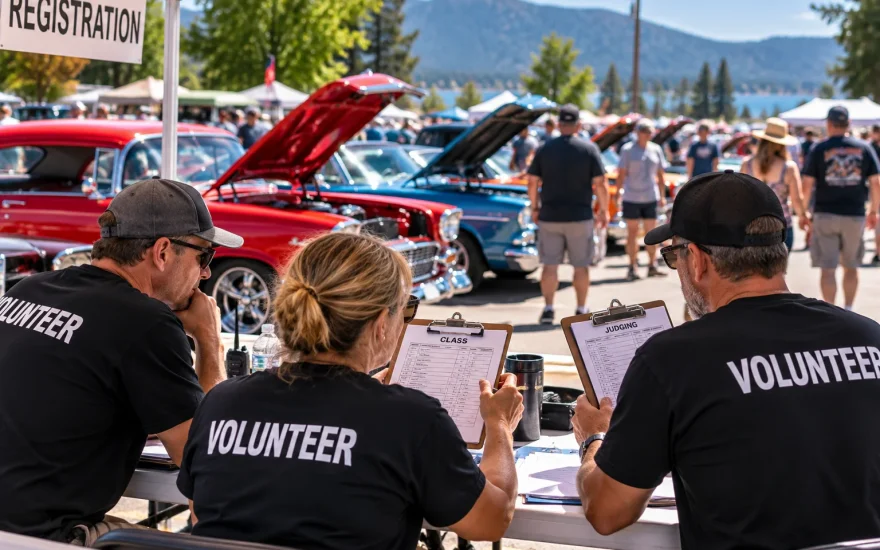
Assign responsibility to a registration coordinator or head judge rather than leaving disputes to whoever happens to be staffing the entrance.
Consider the owner of a 1987 Chevrolet pickup converted into a custom street truck. They register under Classic Truck, but the event rules place extensively modified trucks in Custom.
A sensible process would be:
- Review the vehicle information against the published definitions.
- Explain the classification decision to the owner.
- Allow a correction before the published class-assignment deadline.
- Record the final decision in the registration and judging records.
The goal isn’t to win an argument at the gate. It’s to apply the same definitions to every entrant.
Clear classes prevent many disputes, but they still need to fit a fair judging process for the entire show, from registration and scoring to the final awards announcement.
Explain how ties and special awards work#
Don’t leave tie-breaking to an improvised discussion beside the trophy table.
A judged class might use a predetermined secondary score, such as build quality or overall condition. A remaining tie could go to an additional review by the head judge.
People’s Choice may require a different approach, such as a published runoff procedure or a shared award.
Explain whether class winners remain eligible for Best in Show, whether a vehicle can receive multiple special awards and whether previous winners face restrictions in future events.
These policies matter even at small shows. Entrants don’t need a lengthy rulebook, but they deserve to know how winners will be selected.
Review the class breakdown after the show#
The most useful information for planning next year’s classes comes from the event you just finished.
Keep a simple record of how many vehicles entered each category, how many were reclassified, which classes attracted complaints and where judges struggled to apply the criteria.
Suppose your show offered separate awards for 1980s classics and 1990s classics, but those categories attracted two and three vehicles respectively. Combining them next year may be reasonable.
If the modified truck class unexpectedly attracted 30 vehicles while the stock truck class had four, it might be worth dividing modified trucks into more specific categories and reconsidering the stock division.
Review the judging workload as well. A class with 25 vehicles may require more judging time or another volunteer, even if its competitors fit the category perfectly.
Ask whether any special trophies duplicated existing class awards. An event that already has Best Custom doesn’t necessarily need a separate Best Modified award unless the definitions are meaningfully different.
For a recurring show, these records gradually replace guesswork with actual participation patterns.
The class list should evolve with the vehicles and people who make the event worthwhile. A small show doesn’t need twenty trophy categories to feel inclusive, and a large show doesn’t become fair simply by offering more awards.
Start with recognizable groups, make thoughtful adjustments when registration justifies them and keep the rules consistent once competition begins. Owners may disagree about which vehicle deserved the trophy, but they should never have to wonder which competition they entered.